


Selling on Amazon is rarely made easy for retailers. The pricing structure gets harder to follow every year, and fee increases of six to eight percent for shipping and storage seem to be the rule rather than the exception, often justified by rising fuel prices and ongoing inflation. If you sell on Amazon, it pays to understand exactly which fees you are charged, why they keep climbing, and what you can do to protect your margins. In this article we break down the Amazon fee structure and show you how to reduce your dependence on it.
Which fees does Amazon charge sellers?
Amazon offers two selling plans with different fee structures: the Individual plan and the Professional plan. The monthly subscription differs by plan. On the Professional plan you pay a fixed monthly fee (around €39 per month), while on the Individual plan you pay a per-item fee (around €0.99 per sale) instead of a subscription. As a rule of thumb, the Professional plan starts to pay off once you sell more than about 40 units per month.
On top of the plan, every sale incurs a referral fee (a selling commission). How high it is depends on the product category and the country of sale. Amazon also charges a minimum referral fee of around €0.30 per item, though media products such as books and DVDs, groceries, software, and games consoles are exempt.
Amazon referral fees by category
Referral fees typically range from about 6% to 45%, and average around 15%. They apply to the total sales price, meaning the full amount the buyer pays, including the product and shipping. The figures below give an orientation. Always check the Amazon Seller Central portal for the rates that currently apply to your categories and marketplace.
Category | Referral fee (orientation) |
|---|---|
Computers | 7% |
Consumer electronics | 7% |
Large appliances | 7% |
Beer, wine and spirits | 10% |
Bicycles | 10% |
Tires | 10% |
Additive manufacturing | 12% |
Computer and electronics accessories | 12% |
Home improvement | 12% |
Industrial and scientific | 12% |
Books, music, video and DVD | 15% |
Automotive and powersports | 15% |
Grocery and gourmet | 15% |
Software | 15% |
Sports and outdoors | 15% |
Video games | 15% |
Watches | 15% |
Everything else | 15% |
Jewelry | 20% |
Amazon device accessories | 45% |
For media products there is also a fixed closing fee (roughly €1.01 for books and around €0.81 for music, DVDs and video, and games and software). On top of all this come fulfillment fees if you use Fulfillment by Amazon (FBA), which are calculated by size and weight.
Sendcloud takes on rising Amazon fees
You have probably noticed yourself how much Amazon's shipping fees have risen in recent years. For retailers who want to ship their parcels as cheaply and efficiently as possible, that is far from good news. The good news: it does not have to stay that way. Here is how Sendcloud helps you escape high Amazon fees.
Branch out to alternative marketplaces or your own online shop
The fact is, Amazon is the market leader in many countries, with a large share of online retail. Even so, it is not necessarily the best fit for every business. Products aimed at a specific audience often get more attention on niche marketplaces. Smart retailers spread their sales across several marketplaces, such as eBay, Kaufland, Etsy, and others, rather than relying on a single channel. With flexible, configurable shipping through Sendcloud, moving to alternative marketplaces or selling through your own online shop is straightforward.
Sendcloud offers more than 50 plug-and-play integrations, and with the Sendcloud API you can add configurable shipping features to any shop or marketplace. You also benefit from pre-negotiated shipping rates.
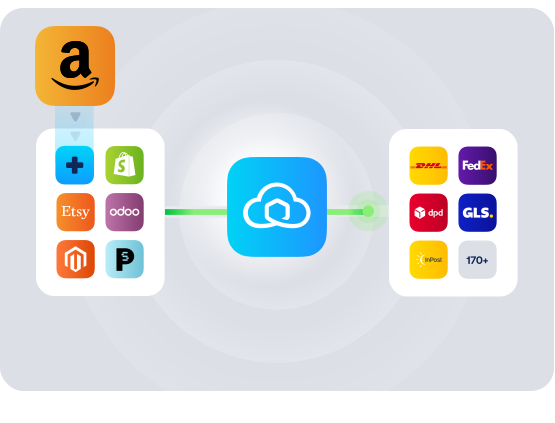
So what should you look for when choosing the ideal online marketplace for your business? Beyond the fees, keep these points in mind:
Reach: the highest reach is not always the most profitable. On platforms with a narrower focus you can avoid wasted exposure and often earn more.
Focus: it can be smarter to sell on marketplaces aimed at a specific target audience.
Usability: listing and selling products should be easy, and the room to design your product pages should factor into your decision.
Competition: if competition on the marketplace is very high and your advertising budget is limited, an alternative may make more sense.
Interfaces: if you run your own online shop, check which marketplace offers suitable interfaces, and whether it is compatible with a shipping platform like Sendcloud.
You will find the best marketplaces summarized in our guide to selling on online marketplaces, and if you use FBA today, our overview of Amazon FBA alternatives is worth a read.
Sendcloud as the shipping platform for Amazon sellers
Moving away from Amazon is not an option because of a strong customer base there, and you want to keep selling on Amazon despite the fees? That is completely understandable, and active Amazon sellers benefit from Sendcloud too. With the Sendcloud platform you can automate your Amazon shop's shipping process, delight customers with a branded delivery experience, and even save on costs. Connect your Amazon shop to Sendcloud in less than two minutes and benefit from an automated shipping process.
Here is how Amazon sellers benefit from Sendcloud:
Access the shipping methods of more than 170 carriers.
Benefit from pre-negotiated shipping rates and save money on shipping.
Automate your shipping with intelligent shipping rules and save time.
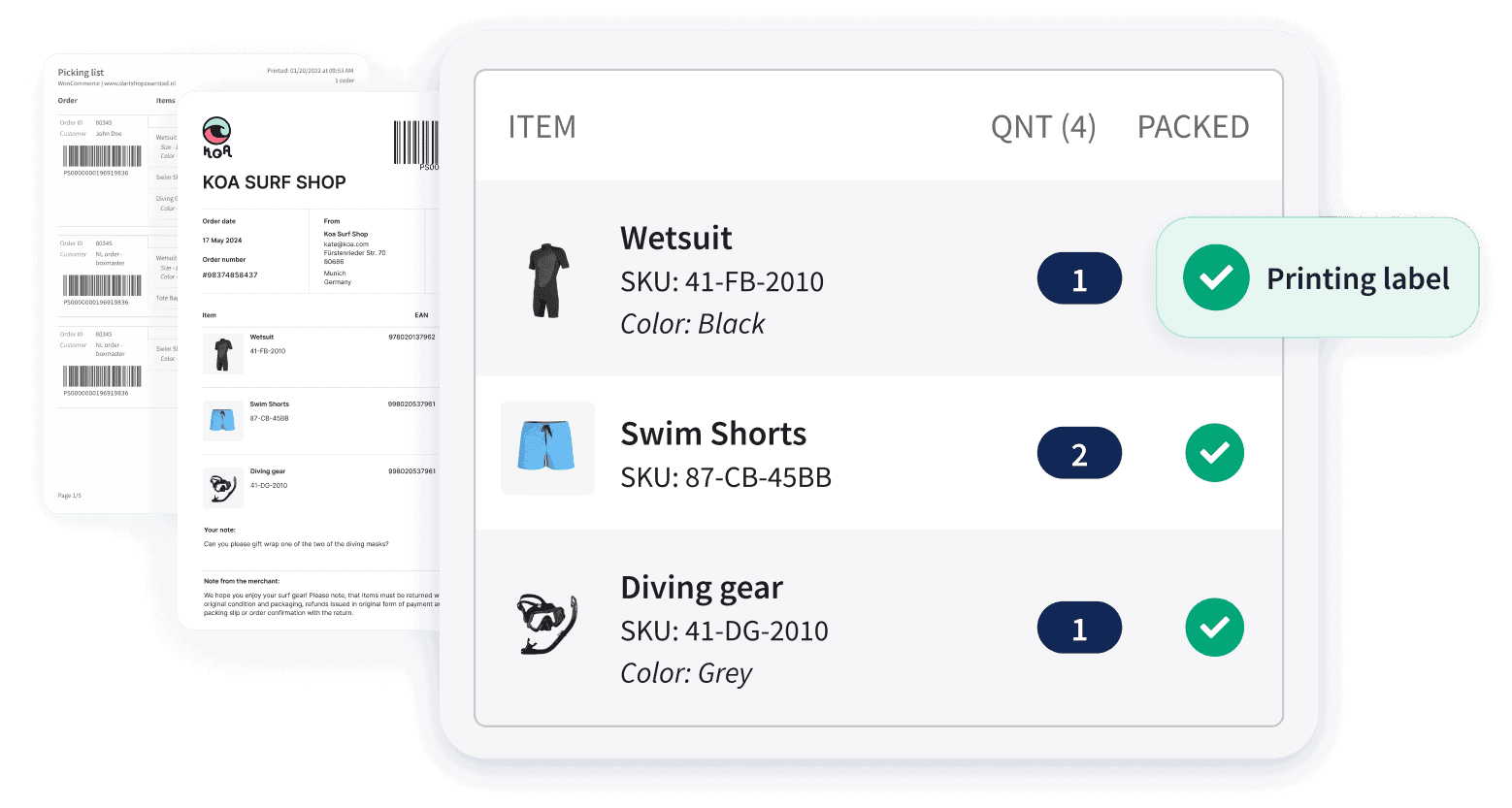
Print shipping labels with a single click.
Keep customers informed with branded tracking emails.
Let customers handle returns through your own returns portal and offer them the return options they want.
Analyze your order and returns data through a clear analytics dashboard.
And much more.
Amazon tracking and Sendcloud
Amazon requires sellers to provide a valid tracking number for shipments. Sendcloud offers a smooth integration of tracking numbers and shipment information, so you can meet this requirement without extra manual work and keep full visibility as an Amazon seller.
How important is the right e-commerce logistics?
Efficient logistics is decisive for the success of many online shops. When shipping and storage run into trouble, the conversion rate often suffers too. E-commerce logistics covers not only shipping costs but also the costs of storage, picking, packaging, and returns. Shops that pass these costs on to customers one to one usually cannot stand out from the competition. When shipping costs look too high, most customers simply search for the same or a similar product elsewhere. Handling shipping well, whatever your size, is what keeps your logistics profitable.
Amazon fees: frequently asked questions
Is VAT charged on Fulfillment by Amazon?
Amazon sellers and buyers exist all over the world, so the VAT rules for selling on Amazon deserve attention. Fulfillment by Amazon is a service billed by Amazon in Luxembourg. If you run a German Amazon business, that means you do not pay VAT on the FBA fees themselves, because the reverse-charge procedure applies. For the goods shipped via FBA, however, VAT must be charged to the buyer, and here what counts is not the place of dispatch but the place of supply, meaning the buyer's country. Rules vary by country, so confirm your obligations for each marketplace you sell on.
How much does Amazon charge for Fulfillment by Amazon?
FBA fulfillment fees are charged per unit and calculated by the size and weight of your product, on top of your selling plan and referral fees. Because they change periodically, check the current FBA rate card in Amazon Seller Central for your marketplace.
How much commission does Amazon take?
The referral fee, or selling commission, depends on the product category and the country of sale, typically ranging from about 6% to 45% and averaging around 15%.
What does it cost to sell on Amazon?
Amazon charges a minimum referral fee of around €0.30 per item. Media products such as books and DVDs, groceries, software, and games consoles are exempt from this minimum.
Where do I find the Amazon fees?
You will find the category-specific Amazon selling fees in the Amazon Seller Central portal, which always reflects the current rates.
Looking into alternatives to Amazon, and handling your shipping more efficiently, pays off, and not only because of steadily rising fees. Want to make your shipping process work harder for you? Get in touch with us.

Author and researcher
Combining expertise in event marketing and communication design, Alexandra leads global event and partner marketing initiatives at Sendcloud for the e-commerce and logistics industry.


Subject matter expert
Dirk Bothof is a Product Lead at Sendcloud with expertise in e-commerce logistics, platform integrations, and shipping technology. He contributes insights on product innovation and scalable solutions for online retailers.
How much time can you save on shipping?

Share
Recommended for you
Marketplaces
Marketplace returns: from operational chaos to return intelligence
January exposed the weak spots in marketplace returns. Learn what shoppers expect, where friction occurs, and how to improve returns before the next peak.
Shipping
Amazon Prime EU: How to become an Amazon Prime Seller
Discover how to sell on Amazon Prime EU. Expert tips for success. Maximize visibility & boost sales. Your guide to thriving on Amazon Prime.

Selling on Cdiscount: How to Stand Out From Your Competitors?
Selling on Cdiscount gives your products great visibility, but how do you stand out from your competitors? Follow our 5 tips!