


Warehouse picking is a fundamental logistics activity for every distribution center, and even more so for dropshipping businesses and those that handle a large number of ecommerce shipments every day.
It's an essential part of order fulfillment and is considered one of the most costly and time- and labor-intensive activities for warehouses.
According to leading industry studies, in fact, warehouse picking can account for up to 55% of a distribution center's operating costs.
In this article we'll look at what warehouse picking is and how to optimize it to reduce the costs and risks associated with order preparation.
What is warehouse picking?
Manual picking
Automated picking
3 tips for managing picking operations more effectively
Coordinate logistics processes with a centralized system
Standardize packaging and labeling
Optimize warehouse mapping and picking
What is warehouse picking?
The term picking literally means "to choose, to select" and refers to the process in which individual items in stock are retrieved so they can be grouped, processed, and finally shipped to fulfill customer orders.
It's a complex set of activities that requires intense work from pickers, who quickly and accurately search for and retrieve the products listed on the picking list in order to fulfill the order as fast as possible.
The efficiency of these operations has a direct impact on key aspects of a business, such as:
customer satisfaction;
company reputation;
profitability.
For these reasons, optimizing warehouse picking has become an absolute priority for companies worldwide. Before looking at how to improve this aspect, let's look at the two main types of warehouse picking: manual and automated.
Manual picking

In classic manual picking, an operator scans barcodes with a handheld computer that can connect to the company's shipping platform .
This type of picking can also involve technologies and automations that are particularly useful for high-volume picking and ecommerce returns management, especially when the warehouse uses returns management software like Sendcloud's, which can simplify and automate return procedures.
The most commonly used manual picking technologies in this regard are:
Pick to light: a light guides the operator to the correct location.
Radio-Frequency Identification (RFID): enables extremely fast picking because the reader doesn't need to be held close to the item — it can identify hundreds of codes in just a few seconds.
Voice picking: a voice guides the picker's work.
These solutions speed up operations and ensure a high level of accuracy, which is why they are mainly adopted by ecommerce businesses and companies that need to handle reverse logistics procedures more quickly and effectively.
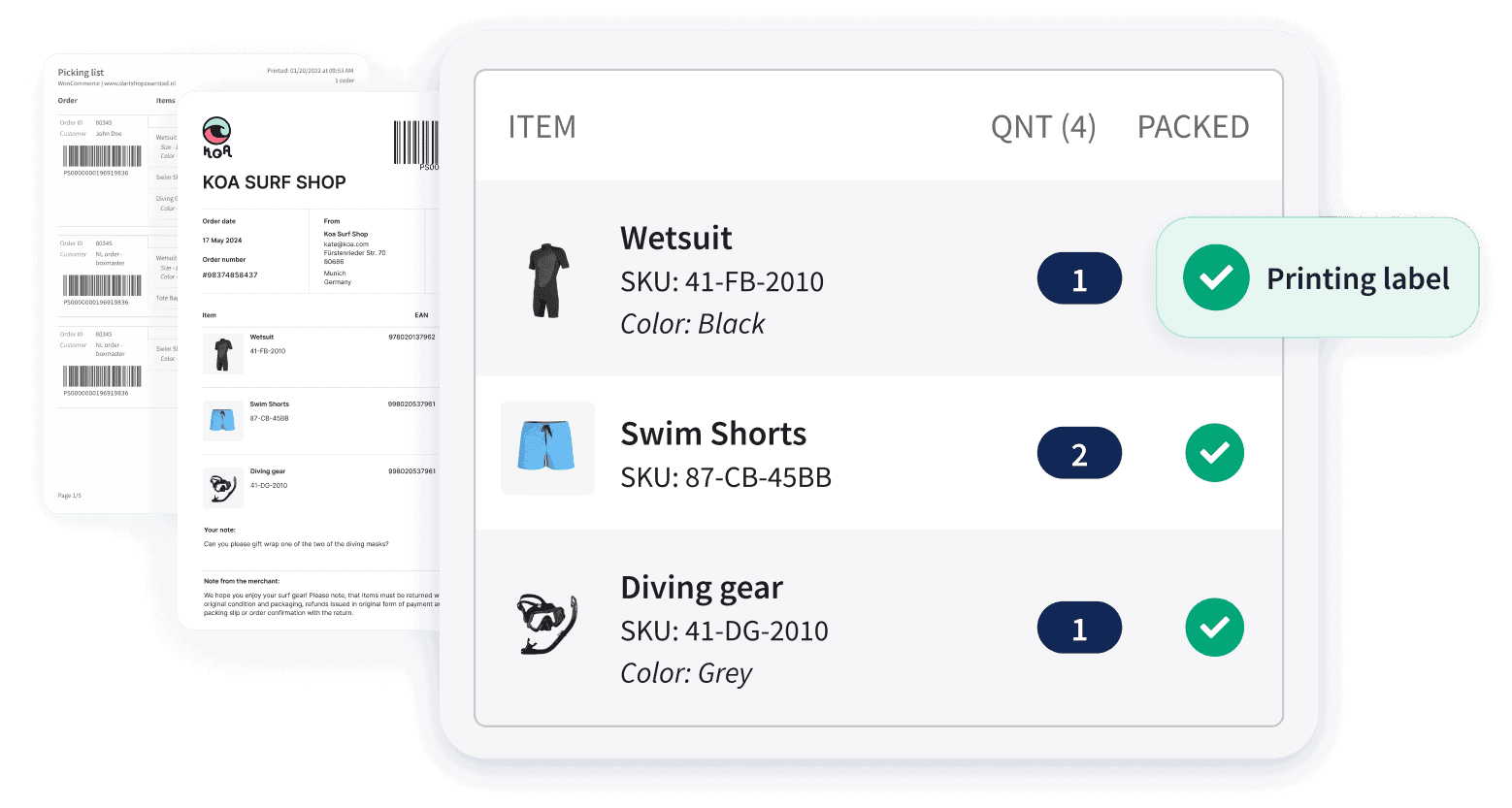
The most significant results in terms of time and resource savings come when warehouse picking is connected to a smart picking-and-packing system like Pack & Go, Sendcloud's feature that makes the picking and packing process more accurate and faster, reducing errors and order preparation time.
Automated picking
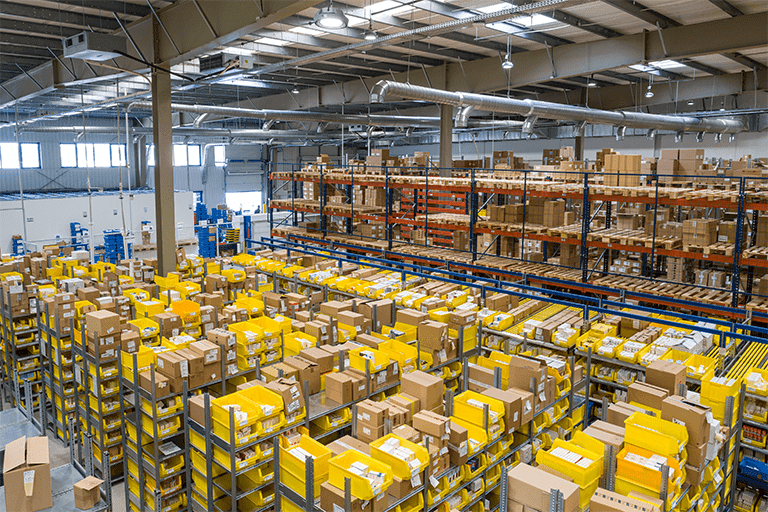
Automated picking uses robotic or semi-robotic technologies (such as collaborative robots) to move heavy loads and support the work of human operators.
While there is an wide range of options and customizations to choose from, the most efficient automation tools work alongside team members and can be easily integrated into existing warehouse processes.
The benefits of automating warehouse picking include:
reduced travel time and shorter picking routes;
full integration with management software;
accurate picking and packing;
fewer human errors and a lower risk of accidents.
3 tips for managing picking operations more effectively
Good management of picking activities — particularly in ecommerce logistics, where demand for fast, accurate solutions keeps growing — represents a huge opportunity to improve customer satisfaction and reduce operating costs.
Here are three tips to improve your warehouse picking.
1. Coordinate logistics processes with a centralized system
Storage and picking operations need to be planned with every step of the supply chain in mind, from order receipt to shipment. That's why you should consider integrating advanced solutions such as ERP and WMS, software that can better coordinate all departments and team members.
Ecommerce shipping software also makes it possible to manage all order preparation and shipping operations in a unified way, while also reducing the risk of errors, cutting handling and delivery times, and lowering the number of ecommerce returns you need to process.
2. Standardize packaging and labeling
Workflows and processes should be standardized as much as possible to keep information in sync between the company, the warehouse, and the carrier.
You could adopt smart tracking methods such as RFID and barcodes, as well as shipping automation systems like Sendcloud's, which, among other things, let you:
create a shipping workflow tailored to your pickup and packaging needs;
generate all the necessary documents in one click;
print all your labels at once;
assign the most suitable shipping method to each order.
Another tip for standardizing your processes is to group products by size and design uniform materials and packaging, so you don't end up with too many different types of packaging and can reduce waste.
3. Optimize warehouse mapping and picking
Studying your product allocation strategy lets you minimize wasted travel time for pickers. For example, you could use dedicated picking shelves and flexible pallet racking that can be reconfigured as needed.
To boost warehouse productivity, also consider setting clear priorities for order processing, planning picking activities, and introducing the technologies we've covered in this article.

Author and researcher
How much time can you save on shipping?

Share
Recommended for you

Shipping
Best label printers for shipping labels: a complete guide for e-commerce businesses
Choosing a shipping label printer? Learn when to use A4 vs A6, thermal vs laser, and how to set up a fast, scalable label printing workflow.

Fulfillment
Shipping label guide: What is a shipping label & how does it work?
Learn what a shipping label is, what information it contains and how shipping labels work in e-commerce | Tips to avoid errors and ship faster

Fulfillment
How to pack a parcel: Parcel packing tips for e-commerce merchants
Learn how to pack a parcel for e-commerce. Step-by-step tips, avoid common mistakes, and optimize your shipping with smart packing practices.