


"Ordered today, delivered tomorrow": a promise well known to many online shoppers. This commitment, which brings the e-commerce experience closer to physical retail, combines the convenience of shopping online with the instant gratification of buying a product in-store. While same-day delivery seems to be the next stage in the evolution of e-commerce, this model turns out to be particularly complex. Its benefits are obvious to everyone, but its challenges are underestimated — for trendy startups and established carriers alike. Many have already taken the risk of offering same-day delivery at scale, but so far, few have managed to turn it into a profitable business model.
What are the challenges of same-day delivery, and what does its future look like? Here's our analysis.
What is same-day delivery?
Same-day delivery is a typical e-commerce term indicating that an order will be delivered on the same day it was placed. In practice, same-day delivery actually means that the parcel will be delivered within 12 hours.
Same-day delivery: nothing new after all…
Before looking at the future of this particular type of delivery, let's take a brief look back. Same-day delivery is a business model that has generated a lot of interest since the early days of e-commerce. In no time at all, new startups sprang up promising to deliver orders to people's homes quickly (sometimes in under 2 hours).
Clearly an attractive promise, since these companies easily managed to raise millions to fund their growth. Unfortunately, it quickly turned out to be "too good to be true." Take the example of meal delivery startups going bankrupt one after another. It's clearly difficult to turn same-day delivery into a profitable model.
That doesn't mean same-day delivery is impossible: the example of Amazon
Few succeed, but there are companies that manage to offer same-day delivery, mostly the giants like Amazon or Cdiscount. For these major retailers, it's an additional service with "marketing value." These companies don't need to generate a direct profit from it, which gives them an advantage over other online stores. In fact, this type of delivery represents an unprecedented budget deficit for the market's biggest players, which is absolutely not viable for 80% of online stores today.
Why is same-day delivery so difficult?
2 — or rather 3 — aspects are fundamental to understanding the limits of same-day delivery: cost, speed, and, increasingly, sustainability.
1. Delivery costs
Whatever the situation, price is the most important deciding factor. Consumers are often willing to pay a small premium, but only if the added value is significant: higher quality, extra features, more security, or better service, for example. But what is the added value of express delivery compared to next-day delivery?
According to a survey conducted by McKinsey in Germany, France, Sweden, and the United Kingdom, 50% of consumers are willing to pay between €6 and €7 in shipping costs for an order worth €59.
It's easy to understand why customers are willing to pay extra for fast delivery. The real question is why and when they're willing to do so. Someone who needs to find a birthday gift quickly will be more inclined to spend more so they don't show up empty-handed on the day of the event.
Efficiency is essential
Keeping shipping costs low requires efficiency. In other words, the whole challenge lies in transporting parcels from point A to point B as efficiently as possible, with as little physical labor as possible and routes that fit together perfectly.
Only once fully autonomous vehicles handle "last-mile" delivery can we expect a significant reduction in shipping costs.
2. Delivery speed
While shipping used to take 3 to 5 days just a few years ago, next-day delivery is now the norm. This is thanks to technological advances and increasingly efficient transport processes. But it's important to understand that this is only possible because more and more parcels are being shipped.
Shorter delivery times are largely due to the "economies of scale" of shipping: the more parcels sent, the more often and more efficiently they can be delivered.
Currently, relatively few online stores offer same-day delivery. On top of that, carriers also need to be able to adjust their routes at the last minute. Orders to be delivered the same day are often delivered in half-empty vans, which requires much more work per parcel. This drives up actual shipping costs considerably and is far from ideal from a sustainability standpoint.
3. Sustainability and delivery
Eco-responsibility is a growing concern for both consumers and businesses. Transport is considered one of the most polluting sectors, largely because of e-commerce. Parcels typically travel long distances, and almost all of them are delivered to a different address.
Currently, same-day delivery often means covering unnecessary extra kilometers.
When it comes to sustainability, the distance vehicles have to travel is the main obstacle. Delivery in urban areas is cheaper and more sustainable, since it's done using a fully loaded van that covers a shorter route.
Sendcloud, a partner of carrier GLS for more responsible parcel shipping
Do consumers really demand same-day delivery?
When it comes to express delivery, the question isn't just "is it feasible?" but above all "what do my customers actually want?". Besides price and speed, other factors matter to consumers too.
Does it really matter to the consumer whether their new pair of shoes is delivered the same day? Or would they rather have it delivered the next day if given the option to choose a time slot?
Increasingly, we see that the accuracy of the delivery time matters more than speed. This is one of the reasons why consumers often opt for delivery to a pickup point. That way, they're guaranteed not to miss the delivery and can collect their parcel whenever it suits them.
Going faster doesn't necessarily mean doing better. More and more consumers favor accurate delivery times and options that increase the chances of a smooth delivery.
The evolution of consumer expectations
Deep down, consumer needs never really change. Since the early days of e-commerce, and even before, people have always wanted to get the products they want as quickly as possible and at the lowest cost. With growing attention to sustainability, eco-conscious consumers may increasingly favor a delivery method with the smallest possible environmental impact.
For now, same-day delivery only addresses one of these needs. Unless its cost gets closer to that of next-day delivery, it will never become the dominant shipping option. It's also important that same-day delivery not be more polluting than 24-hour delivery.
However, in that case, sustainability is likely to go hand in hand with cost reduction. Indeed, cutting the number of kilometers traveled — and thus gaining efficiency in the delivery process — makes it both more sustainable and cheaper to run express delivery.
Needs and expectations
While consumer needs don't really change at their core, their expectations shift regularly. But surely consumer needs have changed too? They used to ask for next-day delivery, and now they want same-day delivery.
It's not the need that changes, but consumer expectations.
Consumer needs are constant: they want faster service, better quality, the best price, and so on. Their expectations, however, shift every time they're presented with new options that meet their needs better than the current dominant solution.
Until recently, customers were impressed by next-day delivery and saw it as a major added value. Now that 24-hour delivery has become the norm and most orders are delivered the next day, it's seen as "normal." Expectations have shifted accordingly. As a result, a two- or three-day delivery is no longer seen as normal, but perceived negatively. And that's what affects online stores' conversion rates.
Further reading: The 5 most frequently asked questions about parcel delivery
Same-day delivery is reshaping consumer expectations
The same goes for (very) fast delivery: once consumers discover it and use it often, any other shipping option that takes longer feels like a step backward. In other words, offering consumers a new, better-quality experience changes their expectations.
Money obviously plays an important role, and shipping costs are the most important consideration for most consumers. But as the price of same-day delivery drops relative to next-day delivery, more and more customers are choosing this delivery option.
This calls for innovation from the industry and seamless cooperation with online retailers. The online stores that succeed will use same-day delivery to stand out and attract new customers… until "delivery within 12 hours" becomes the dominant shipping option and online stores once again have to find new ways to differentiate themselves.
The features that will reshape consumer expectations in 2020
Increasingly narrow time slots that lead to more successful delivery attempts.
The ability to set the delivery time yourself: consumers get more freedom to choose a day that suits them and enjoy a successful home delivery.
Live tracking and traceability: more successful delivery attempts, faster stops for couriers, and more freedom for consumers.
Last-minute changes to the delivery location and time: the shipping process becomes more flexible for consumers, who make it their own.
Communication with the courier: a better experience and faster delivery.
To learn more about 2020 e-commerce trends, check out the Sendcloud blog!
How can online stores keep up with evolving consumer expectations?
A wide range of shipping options, a pleasant tracking and tracing experience, and a smooth shipping process all lead to higher conversion rates and more loyal customers. To stand out — and above all, avoid falling behind — it's important to optimize your shipping process in 2019.
If you don't have the scale of Amazon or Cdiscount, the best option is to use a shipping platform like Sendcloud, which lets you combine different shipping options, save time, and exceed consumer expectations with a customized track & trace system. Another option is to offer same-day delivery for certain high-margin products, or to make sure that each pickup includes a significant number of same-day shipments.
Sendcloud, your delivery partner
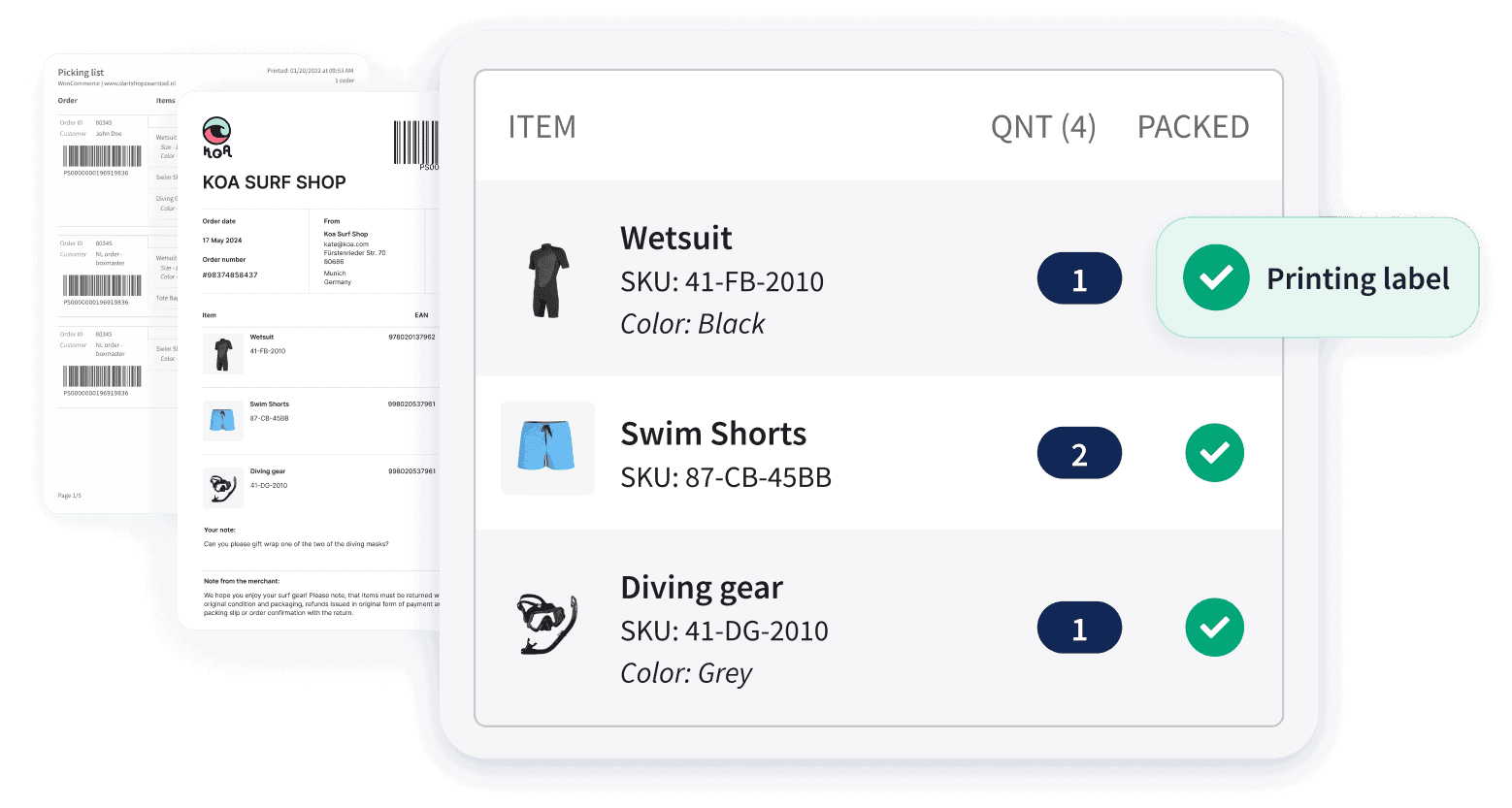
The Sendcloud platform connects your online store with carriers, enabling fast and efficient deliveries. Sendcloud is constantly working on developing new features, with the goal of helping you in your work as an online retailer by keeping you as competitive as possible in an ever-changing market.


Author and researcher
As former Marketing Specialist at Sendcloud, Daniëlle Elbertse focused on IT and e-commerce logistics, sharing insights on shipping optimization and online retail operations.
How much time can you save on shipping?

Share
Recommended for you

VAT on shipping costs: how does it work?
Why do you pay VAT on shipping costs? Which VAT rate should you use, and how do you pass it on smartly to your customer? Find the answers in this guide.

5 tips to speed up your online store for more conversions
Speeding up your online store is essential for more conversions. Read 5 tips here that help you improve your site speed!
Shipping
Checkout conversion in 2026: The role of flexible delivery
Checkout conversion suffers when delivery options fall short. Discover how flexible delivery choices reduce cart abandonment and increase conversion