The Amazon Shipping API, minus the integration work
Add the Amazon Shipping API to your e-commerce backend, WMS, or 3PL stack through one Sendcloud integration. Ship Amazon marketplace orders alongside DHL, UPS, and 170+ other carriers without a separate Amazon Shipping contract.
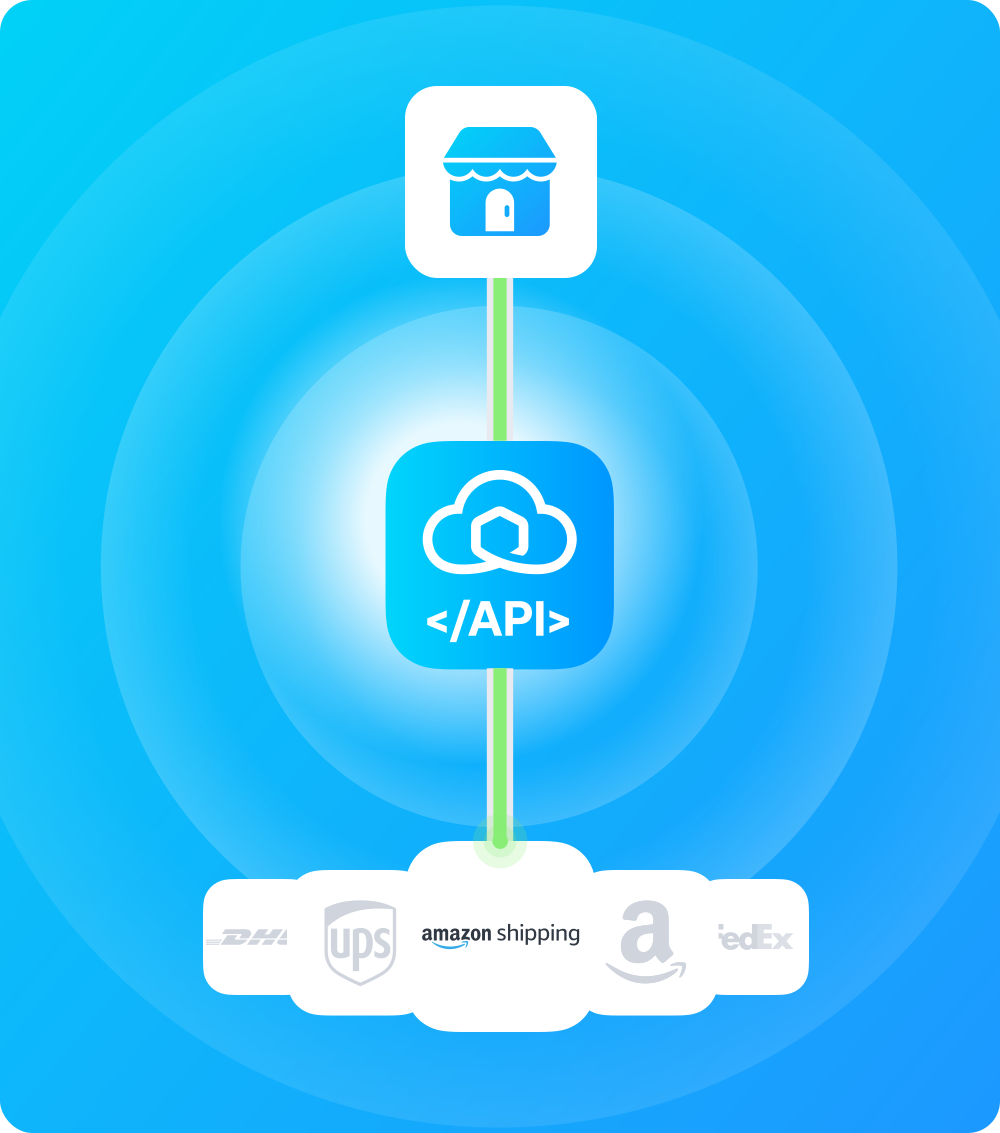
The Amazon Shipping API, minus the integration work
Add the Amazon Shipping API to your e-commerce backend, WMS, or 3PL stack through one Sendcloud integration. Ship Amazon marketplace orders alongside DHL, UPS, and 170+ other carriers without a separate Amazon Shipping contract.
The Amazon Shipping API, minus the integration work
Add the Amazon Shipping API to your e-commerce backend, WMS, or 3PL stack through one Sendcloud integration. Ship Amazon marketplace orders alongside DHL, UPS, and 170+ other carriers without a separate Amazon Shipping contract.
Entièrement documentée
Testée sur des millions d’envois
Disponible dans toutes les formules
Why integrate Amazon Shipping through the Sendcloud API?

Built for Amazon Marketplace sellers
Amazon Shipping lets marketplace sellers ship orders outside Amazon's Fulfilled by Amazon program. Sendcloud connects to both Shipper Central and Buy Shipping from one integration.

Two Amazon shipping platforms, one integration
Shipper Central is Amazon's seller-facing shipping dashboard. Buy Shipping purchases rates directly inside Seller Central. Sendcloud's REST API supports both flows with a single label call.

Intégrez plus de 170 transporteurs d’un coup
Arrêtez d’intégrer et de maintenir chaque transporteur séparément : une seule API suffit.

Conformité GDPR
Nous respectons les règles GDPR de protection des données et de la vie privée en Europe.

Uptime de l’API de 99,99 %
Un logiciel d’expédition fiable, construit sur AWS avec les meilleures technologies du marché.

Certifié ISO 27001
Les normes les plus strictes au monde en matière de sécurité de l’information.
Why integrate Amazon Shipping through the Sendcloud API?
Built for Amazon Marketplace sellers
Amazon Shipping lets marketplace sellers ship orders outside Amazon's Fulfilled by Amazon program. Sendcloud connects to both Shipper Central and Buy Shipping from one integration.
Two Amazon shipping platforms, one integration
Shipper Central is Amazon's seller-facing shipping dashboard. Buy Shipping purchases rates directly inside Seller Central. Sendcloud's REST API supports both flows with a single label call.
Intégrez plus de 170 transporteurs d’un coup
Arrêtez d’intégrer et de maintenir chaque transporteur séparément : une seule API suffit.
Conformité GDPR
Nous respectons les règles GDPR de protection des données et de la vie privée en Europe.
Uptime de l’API de 99,99 %
Un logiciel d’expédition fiable, construit sur AWS avec les meilleures technologies du marché.
Certifié ISO 27001
Les normes les plus strictes au monde en matière de sécurité de l’information.
Why integrate Amazon Shipping through the Sendcloud API?
Built for Amazon Marketplace sellers
Amazon Shipping lets marketplace sellers ship orders outside Amazon's Fulfilled by Amazon program. Sendcloud connects to both Shipper Central and Buy Shipping from one integration.
Two Amazon shipping platforms, one integration
Shipper Central is Amazon's seller-facing shipping dashboard. Buy Shipping purchases rates directly inside Seller Central. Sendcloud's REST API supports both flows with a single label call.
Intégrez plus de 170 transporteurs d’un coup
Arrêtez d’intégrer et de maintenir chaque transporteur séparément : une seule API suffit.
Conformité GDPR
Nous respectons les règles GDPR de protection des données et de la vie privée en Europe.
Uptime de l’API de 99,99 %
Un logiciel d’expédition fiable, construit sur AWS avec les meilleures technologies du marché.
Certifié ISO 27001
Les normes les plus strictes au monde en matière de sécurité de l’information.
L’API d’expédition complète pour tout système
L’API d’expédition complète pour tout système
L’API d’expédition complète pour tout système
« Sendcloud nous permet de connecter énormément de transporteurs différents, sans friction. »
Oscar Ziegler
Founder and CEO
-
Hive

« Sendcloud nous permet de connecter énormément de transporteurs différents, sans friction. »
Oscar Ziegler
Founder and CEO
-
Hive
« Sendcloud nous permet de connecter énormément de transporteurs différents, sans friction. »
Oscar Ziegler
Founder and CEO
-
Hive
Exemples d’intégration de l’API
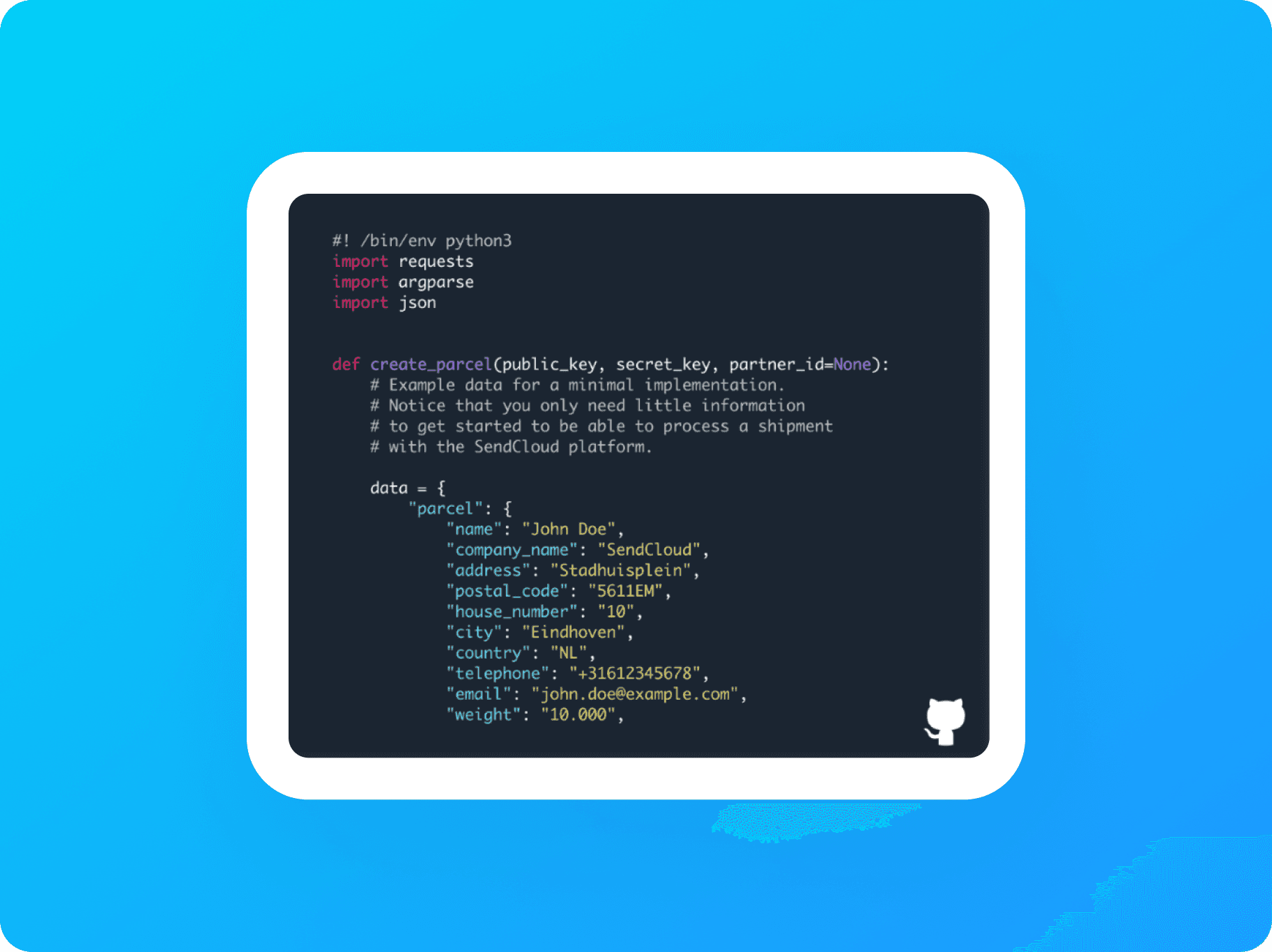
Intégration de l’API
Découvrez un exemple simple d’intégration de l’API en Python.
Service Point Picker
Découvrez comment intégrer le Service Point Picker dans une application sur mesure.
Exemples d’intégration de l’API
Intégration de l’API
Découvrez un exemple simple d’intégration de l’API en Python.
Service Point Picker
Découvrez comment intégrer le Service Point Picker dans une application sur mesure.
Exemples d’intégration de l’API
Intégration de l’API
Découvrez un exemple simple d’intégration de l’API en Python.
Service Point Picker
Découvrez comment intégrer le Service Point Picker dans une application sur mesure.



Par où commencer ?
Par où commencer ?
Par où commencer ?


Une seule API pour tous vos besoins d’expédition
Sans frais de mise en service
Intégration le jour même
Expédiez avec les meilleurs transporteurs d’Europe
Questions et réponses
Why integrate the Amazon Shipping API through Sendcloud instead of directly?
Direct Amazon Shipping integration means understanding which Amazon platform applies to your use case (Shipper Central for transportation logistics, Seller Central + Buy Shipping for marketplace fulfillment) and building separate flows for each.
Through Sendcloud, you authenticate once with your Sendcloud API key and use a single REST schema for Amazon Shipping alongside every other carrier in your account. A direct Amazon Shipping contract is required either way; Sendcloud rates aren't offered for Amazon Shipping.
What happens when Amazon Shipping updates or breaks their API?
Amazon Shipping availability and shipping methods vary by country and update independently across markets. Direct integrators have to track changes per region, refresh credentials, and adjust payload structures when Amazon ships changes.
When you ship Amazon Shipping through the Sendcloud REST API, the abstraction layer absorbs those changes. Sendcloud's engineering monitors Amazon's developer documentation and adjusts the carrier connector internally. Your Sendcloud request schema stays the same.
Can I use my own Amazon Shipping contract?
Yes, and you have to. Amazon Shipping requires a direct contract with Amazon; Sendcloud rates aren't offered. Visit Amazon's official site to start one.
In Sendcloud, go to Shipping > Carriers > My Contracts, find Amazon Shipping, and click Add Contract. Connect your Amazon Shipper Central account through the activation flow. A Lite, Growth, or Premium plan is required.
For Amazon Buy Shipping (a feature inside Seller Central), use Sendcloud's Amazon Seller Central integration as a separate flow.
See the Amazon Shipping contract activation Help Center article.
Which Amazon Shipping products are supported through the API?
Sendcloud connects to Amazon's own carrier service in markets where Amazon offers it. Specific shipping methods depend on your contract and country; the Sendcloud shipping-methods endpoint returns the up-to-date list.
Amazon Shipping is most widely available in the UK and Spain, with growing presence in Germany, Italy, and France. Check Amazon's country-specific availability before activating.
Which Amazon Shipping-specific features does the API expose?
Amazon Shipping-specific features exposed through the integration:
Amazon Shipper Central integration for transportation logistics
Amazon Buy Shipping (within Seller Central): purchase shipping labels for Amazon orders directly, accessible through Sendcloud's Amazon Seller Central integration
Country-specific shipping methods that vary by Amazon Shipping market availability
Amazon's own carrier network for last-mile delivery in supported countries
How do I track Amazon Shipping parcels?
Amazon Shipping tracking events flow through Shipper Central into Sendcloud's webhook system once your contract is connected. The same code path covers Amazon Shipping and every other connected carrier on your account.
All events normalise to Sendcloud's status taxonomy through GET https://panel.sendcloud.sc/api/v2/tracking/{tracking_number}, with the chronological history under statuses and each event mapped to parent_status. Subscribe to the parcel-status-changed webhook for push updates. Reference: Tracking parcels.
How do I create Amazon Shipping return labels?
Amazon Shipping return method availability depends on your contract and country. Since Amazon Shipping is most widely available in the UK and Spain, return support varies by region. The Sendcloud shipping-methods endpoint returns the methods enabled for your account.
All return labels are created through Sendcloud's standalone v3 Returns API (synchronous or asynchronous; async is recommended for higher throughput). No outgoing parcel lookup or JWT tokens are required. Reference: Returns API overview.
How does Sendcloud's multi-carrier API compare to connecting carriers individually?
The Sendcloud REST API gives you access to 170+ carriers, including Amazon Shipping, through one credential set, one schema, one webhook stream, and one error model. Connecting carriers individually means handling separate authentication, payload formats, and tracking systems for each, and redoing the work every time a carrier ships breaking changes upstream.
With Sendcloud, you ship Amazon Shipping alongside Royal Mail, DHL, DPD, and Evri, or any other carrier in your account using the same code. Route shipments between carriers based on rules (weight, destination, service level, cost) without writing carrier-specific routing logic. Fall back to alternative carriers automatically if Amazon Shipping's upstream system has issues.
Adding a new carrier later means adding it to your Sendcloud account, not building a new integration.
Questions et réponses
Why integrate the Amazon Shipping API through Sendcloud instead of directly?
Direct Amazon Shipping integration means understanding which Amazon platform applies to your use case (Shipper Central for transportation logistics, Seller Central + Buy Shipping for marketplace fulfillment) and building separate flows for each.
Through Sendcloud, you authenticate once with your Sendcloud API key and use a single REST schema for Amazon Shipping alongside every other carrier in your account. A direct Amazon Shipping contract is required either way; Sendcloud rates aren't offered for Amazon Shipping.
What happens when Amazon Shipping updates or breaks their API?
Amazon Shipping availability and shipping methods vary by country and update independently across markets. Direct integrators have to track changes per region, refresh credentials, and adjust payload structures when Amazon ships changes.
When you ship Amazon Shipping through the Sendcloud REST API, the abstraction layer absorbs those changes. Sendcloud's engineering monitors Amazon's developer documentation and adjusts the carrier connector internally. Your Sendcloud request schema stays the same.
Can I use my own Amazon Shipping contract?
Yes, and you have to. Amazon Shipping requires a direct contract with Amazon; Sendcloud rates aren't offered. Visit Amazon's official site to start one.
In Sendcloud, go to Shipping > Carriers > My Contracts, find Amazon Shipping, and click Add Contract. Connect your Amazon Shipper Central account through the activation flow. A Lite, Growth, or Premium plan is required.
For Amazon Buy Shipping (a feature inside Seller Central), use Sendcloud's Amazon Seller Central integration as a separate flow.
See the Amazon Shipping contract activation Help Center article.
Which Amazon Shipping products are supported through the API?
Sendcloud connects to Amazon's own carrier service in markets where Amazon offers it. Specific shipping methods depend on your contract and country; the Sendcloud shipping-methods endpoint returns the up-to-date list.
Amazon Shipping is most widely available in the UK and Spain, with growing presence in Germany, Italy, and France. Check Amazon's country-specific availability before activating.
Which Amazon Shipping-specific features does the API expose?
Amazon Shipping-specific features exposed through the integration:
Amazon Shipper Central integration for transportation logistics
Amazon Buy Shipping (within Seller Central): purchase shipping labels for Amazon orders directly, accessible through Sendcloud's Amazon Seller Central integration
Country-specific shipping methods that vary by Amazon Shipping market availability
Amazon's own carrier network for last-mile delivery in supported countries
How do I track Amazon Shipping parcels?
Amazon Shipping tracking events flow through Shipper Central into Sendcloud's webhook system once your contract is connected. The same code path covers Amazon Shipping and every other connected carrier on your account.
All events normalise to Sendcloud's status taxonomy through GET https://panel.sendcloud.sc/api/v2/tracking/{tracking_number}, with the chronological history under statuses and each event mapped to parent_status. Subscribe to the parcel-status-changed webhook for push updates. Reference: Tracking parcels.
How do I create Amazon Shipping return labels?
Amazon Shipping return method availability depends on your contract and country. Since Amazon Shipping is most widely available in the UK and Spain, return support varies by region. The Sendcloud shipping-methods endpoint returns the methods enabled for your account.
All return labels are created through Sendcloud's standalone v3 Returns API (synchronous or asynchronous; async is recommended for higher throughput). No outgoing parcel lookup or JWT tokens are required. Reference: Returns API overview.
How does Sendcloud's multi-carrier API compare to connecting carriers individually?
The Sendcloud REST API gives you access to 170+ carriers, including Amazon Shipping, through one credential set, one schema, one webhook stream, and one error model. Connecting carriers individually means handling separate authentication, payload formats, and tracking systems for each, and redoing the work every time a carrier ships breaking changes upstream.
With Sendcloud, you ship Amazon Shipping alongside Royal Mail, DHL, DPD, and Evri, or any other carrier in your account using the same code. Route shipments between carriers based on rules (weight, destination, service level, cost) without writing carrier-specific routing logic. Fall back to alternative carriers automatically if Amazon Shipping's upstream system has issues.
Adding a new carrier later means adding it to your Sendcloud account, not building a new integration.
Questions et réponses
Why integrate the Amazon Shipping API through Sendcloud instead of directly?
Direct Amazon Shipping integration means understanding which Amazon platform applies to your use case (Shipper Central for transportation logistics, Seller Central + Buy Shipping for marketplace fulfillment) and building separate flows for each.
Through Sendcloud, you authenticate once with your Sendcloud API key and use a single REST schema for Amazon Shipping alongside every other carrier in your account. A direct Amazon Shipping contract is required either way; Sendcloud rates aren't offered for Amazon Shipping.
What happens when Amazon Shipping updates or breaks their API?
Amazon Shipping availability and shipping methods vary by country and update independently across markets. Direct integrators have to track changes per region, refresh credentials, and adjust payload structures when Amazon ships changes.
When you ship Amazon Shipping through the Sendcloud REST API, the abstraction layer absorbs those changes. Sendcloud's engineering monitors Amazon's developer documentation and adjusts the carrier connector internally. Your Sendcloud request schema stays the same.
Can I use my own Amazon Shipping contract?
Yes, and you have to. Amazon Shipping requires a direct contract with Amazon; Sendcloud rates aren't offered. Visit Amazon's official site to start one.
In Sendcloud, go to Shipping > Carriers > My Contracts, find Amazon Shipping, and click Add Contract. Connect your Amazon Shipper Central account through the activation flow. A Lite, Growth, or Premium plan is required.
For Amazon Buy Shipping (a feature inside Seller Central), use Sendcloud's Amazon Seller Central integration as a separate flow.
See the Amazon Shipping contract activation Help Center article.
Which Amazon Shipping products are supported through the API?
Sendcloud connects to Amazon's own carrier service in markets where Amazon offers it. Specific shipping methods depend on your contract and country; the Sendcloud shipping-methods endpoint returns the up-to-date list.
Amazon Shipping is most widely available in the UK and Spain, with growing presence in Germany, Italy, and France. Check Amazon's country-specific availability before activating.
Which Amazon Shipping-specific features does the API expose?
Amazon Shipping-specific features exposed through the integration:
Amazon Shipper Central integration for transportation logistics
Amazon Buy Shipping (within Seller Central): purchase shipping labels for Amazon orders directly, accessible through Sendcloud's Amazon Seller Central integration
Country-specific shipping methods that vary by Amazon Shipping market availability
Amazon's own carrier network for last-mile delivery in supported countries
How do I track Amazon Shipping parcels?
Amazon Shipping tracking events flow through Shipper Central into Sendcloud's webhook system once your contract is connected. The same code path covers Amazon Shipping and every other connected carrier on your account.
All events normalise to Sendcloud's status taxonomy through GET https://panel.sendcloud.sc/api/v2/tracking/{tracking_number}, with the chronological history under statuses and each event mapped to parent_status. Subscribe to the parcel-status-changed webhook for push updates. Reference: Tracking parcels.
How do I create Amazon Shipping return labels?
Amazon Shipping return method availability depends on your contract and country. Since Amazon Shipping is most widely available in the UK and Spain, return support varies by region. The Sendcloud shipping-methods endpoint returns the methods enabled for your account.
All return labels are created through Sendcloud's standalone v3 Returns API (synchronous or asynchronous; async is recommended for higher throughput). No outgoing parcel lookup or JWT tokens are required. Reference: Returns API overview.
How does Sendcloud's multi-carrier API compare to connecting carriers individually?
The Sendcloud REST API gives you access to 170+ carriers, including Amazon Shipping, through one credential set, one schema, one webhook stream, and one error model. Connecting carriers individually means handling separate authentication, payload formats, and tracking systems for each, and redoing the work every time a carrier ships breaking changes upstream.
With Sendcloud, you ship Amazon Shipping alongside Royal Mail, DHL, DPD, and Evri, or any other carrier in your account using the same code. Route shipments between carriers based on rules (weight, destination, service level, cost) without writing carrier-specific routing logic. Fall back to alternative carriers automatically if Amazon Shipping's upstream system has issues.
Adding a new carrier later means adding it to your Sendcloud account, not building a new integration.
Product
Solutions
Integrations
© 2026 Sendcloud. All Rights Reserved
Chamber of Commerce: 66572959
VAT number: NL856613897B01
Product
Integrations
Solutions
Resources
© 2026 Sendcloud. All Rights Reserved
Chamber of Commerce: 66572959
VAT number: NL856613897B01
Product
© 2026 Sendcloud. All Rights Reserved
Chamber of Commerce: 66572959
VAT number: NL856613897B01